
My first night at the lodge was nothing like the peaceful wilderness escape I’d imagined. The soundtrack of roaring lions and cackling hyenas did nothing for my insomnia. Sleep didn’t just elude me—it ran me over and reversed for good measure. At exactly 4:30 a.m.—thirty minutes before my alarm—I finally drifted off. They say you can sleep when you’re dead; in that moment, I would’ve happily settled for five borrowed minutes of the afterlife. But adventure waits for no one, so I dragged myself up—half-human, half-zombie—to begin the safari.
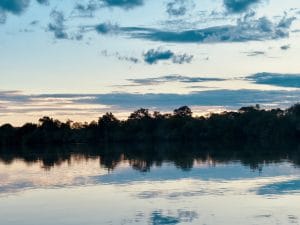
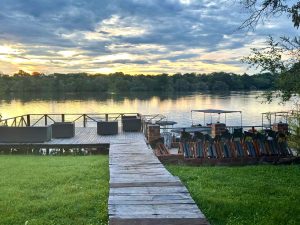
In said half-zombie state, I gathered my gear, charged batteries, and packed memory cards with all the focus of a damp paper towel. I joined the team to cross the Kafue River on our faithful rust-bucket of a boat before transferring to the ever-reliable (if slightly battered) Land Cruiser. Spirits were high. Cameras ready. Delusions of rugged explorer energy in full swing.
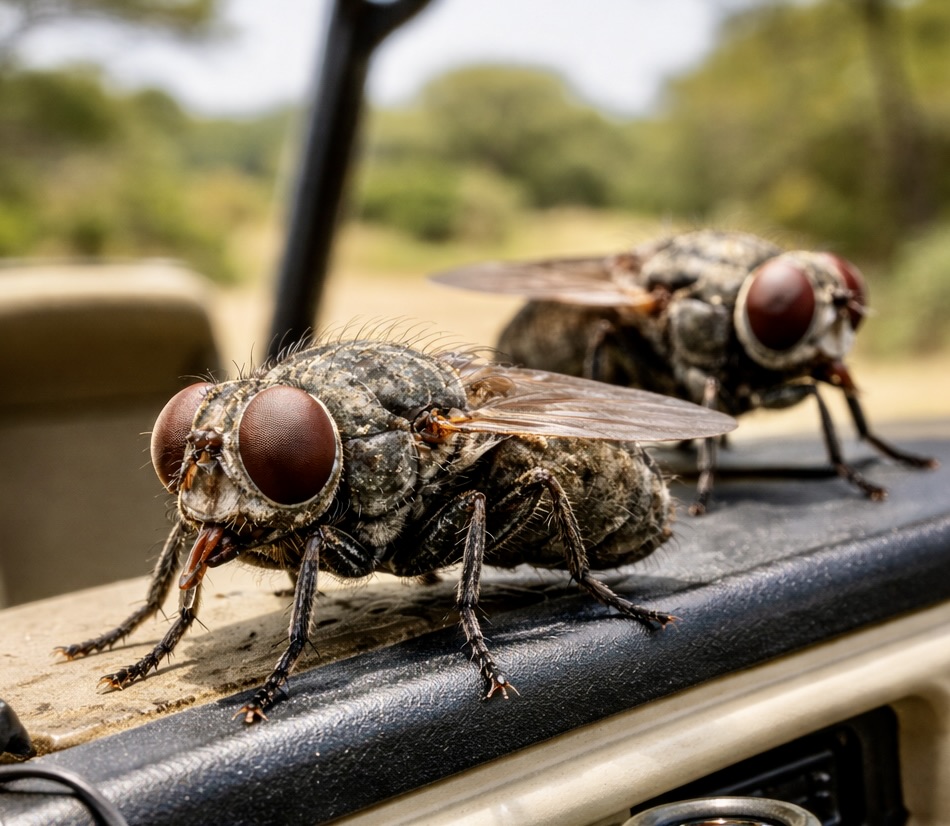
And that’s when I met the real teacher of the African bush: not the guide, not the lions, but the tsetse fly.
Meet the Instructor: Nature’s Buzzing Bully
The first one landed on my arm like it paid rent. I brushed it off—mistake number one. If mosquitoes are irritating dinner guests, tsetse flies are the kind who show up uninvited and redecorate your house. They bite like they mean it—less a nibble and more a jab from a particularly vengeful nurse. Zambia has long rid itself of sleeping sickness, but the flies themselves clearly missed the update memo.
Within minutes, the vehicle felt less like a safari and more like a scene from a wildlife-themed action film. We quickly devised a survival system: the “slap-and-shoot.” When the driver slowed for a photo, one brave soul became the designated swatter, standing guard while the photographer tried to focus. Timing was everything. “Ready?!” “Ready!” SLAP! “Got it! Go, go, go!” It was part National Geographic, part martial arts class, and entirely ridiculous.
If you’ve ever seen a dog scratch itself with desperate enthusiasm, you know the look. By mid-morning, I was flailing around the vehicle, resembling someone trying to dance and lose a fight simultaneously.
Back to the Safari Saga
The day started quietly—so quietly, in fact, that the grass ended up being the most active participant. Thanks to early rains, everything—including the elephants—was camouflaged by a sea of green. We eventually stopped for the sacred bush coffee break by the river, where caffeine began coaxing my brain back to life. The sky brightened, the air softened, and for a few blissful minutes, all felt calm and civilized—like the wilderness itself had taken a gentle morning stretch.
Caffeinated and slightly more human, we climbed back into the Land Cruiser and continued our journey. Spirits were high, conversation flowed, and for a moment, even the flies seemed mercifully absent. Then, just as I was beginning to think the bush had entered a rare moment of serenity—the driver braked hard.
I was mid-swat when the vehicle lurched to a stop. I looked up, ready to glare at whoever thought it wise to test my bruised patience, and then I saw him.
Enter His Majesty
Sprawled across the track in a golden heap was the very voice that had stolen my sleep. Mufasa himself—the king of the jungle—had chosen our road as his bed. The long grass had apparently driven him out in search of sun, and he was basking gloriously, unbothered by our arrival.
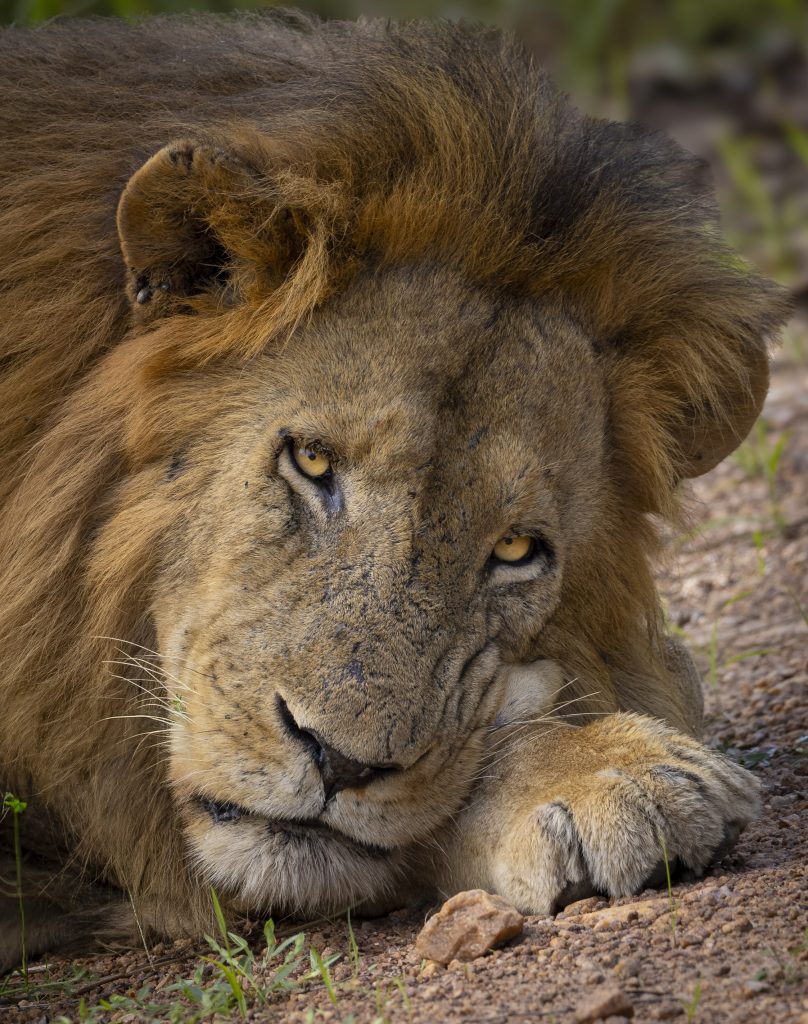
Portrait of a Sleep-Thief
There he was—His Royal Laziness, captured in pure regal disinterest. One paw under his chin, eyes open in that “don’t you dare” way familiar to anyone who’s ever woken a cat.
Those amber eyes said it all: “Yes, I was roaring all night. No, I’m not moving now.”
Even motionless, he radiated that quiet authority—the kind that says, I could end you, but I simply can’t be bothered. The king was serene, languid, and gloriously unimpressed by our excitement.
We sat in awe, grateful no other vehicles had arrived to break the moment. The tsetse fly strategy was instantly abandoned—everybody wanted their shot. Mufasa wasn’t moving, so we took our time, itching and grinning in equal measure. The price of royalty, apparently, was a few extra welts and a full SD card.
When we finally rolled back into camp hours later, we looked like survivors of an endurance test—scratched, sunburnt, and exhilarated. My arms itched, my hair defied gravity, and my camera was overflowing with proof that it had all been worth it.
Reflections from the Itchy Side of Adventure
Back at camp, I collapsed into a chair with my coffee and an almost spiritual appreciation for shade. My camera was full, my legs were blotchy, and my dignity was somewhere out there in the bush. But as the day’s chaos sank in, I realized this was the magic I’d come for.
This wasn’t the manicured, brochure-perfect safari full of quiet sunsets and dust-free smiles. This was the real thing: loud, itchy, unpredictable, and gloriously alive. The kind of experience that humbles you, amuses you, and teaches you—one slap at a time—that you’re only ever borrowing your place in the wild.
That night, when the lions began their chorus again, I didn’t curse them. I smiled, scratched a bite for old times’ sake, and listened. Sleep could wait. After all, you don’t come to Africa for the rest—you come for the roar.
Next Up:
After paying my dues to the tsetse gods, I decided to swap four wheels for water—trading the bush for a slow cruise down the Kafue River. The plan? To soothe my bitten legs, restore my sanity, and give my skin a chance to remember what it feels like not to be part of the food chain.