Part 1
Uganda reveals itself best in motion—literally, not metaphorically. The distances stretch long, the roads have distinct personalities, schedules are more hope than certainty, and the national attitude toward toilets tends toward the theoretical. Getting anywhere here isn’t just transportation; it’s an adventure…and sometimes an endurance sport.
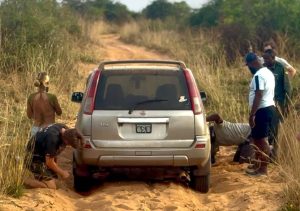
We learned this firsthand—our small crew of travellers, armed with cameras, backpacks, opinions, and wildly different levels of patience—covering 2,300 km in six days. We bounced along pothole-studded roads, sprang up and down in the safari vehicle like over-caffeinated meerkats, and debated with our bladders in places where “facilities” were more an idea than an actual structure.
But I’m getting ahead of myself.
Airports, Aromas, and Promises delayed
Three years ago, we left Uganda full of determination—and perhaps a little delusion—promising ourselves we’d return in just a few months.
Reader… we did not.
Life got in the way, as it does, and “a few months” quietly became three years. But eventually, the team found themselves on a plane routing Johannesburg–Addis–Entebbe, chasing that long-overdue return.
Then came Addis Ababa Airport—a masterclass in organized chaos! With barely any time to connect, getting from one terminal to another became a full-body workout: weaving through people, power-walking past duty‑free temptations, sprinting down endless corridors, stripping off half your clothes for security, then scrambling to get dressed again while trying not to lose a shoe, a passport, or your will to live—before sprinting (again) to the gate.
By the time we collapsed into our seats on the connecting flight—sweaty, breathless, and sporting that glossy-eyed look of people who have just survived an airport-based obstacle course—we felt the first flicker of relief. Uganda was finally within reach. For the first time in three years, it started to feel real…
Entebbe Airport, by contrast, greeted us warmly—and densely. Two immigration counters. Several aircraft’s worth of humanity. We stood there as a group, united in sweat and polite frustration, inching forward at the speed of bureaucracy, until we were finally stamped through and handed over to our hotel driver like a parcel that had been “out for delivery” since 2006.
A quick public service announcement: Ugandan drivers are extremely enthusiastic about pushing luggage trolleys—but far less enthusiastic about ensuring the luggage stays on said trolley. Being wildly overprotective of my camera gear, I politely—but firmly—opted to carry my own bags.
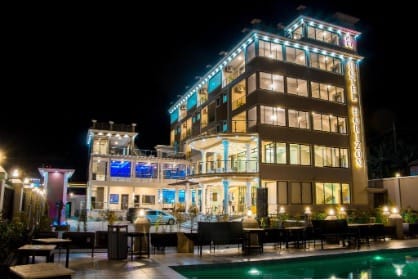
Five minutes later, we arrived at our hotel, where the air was thick with heat and the combined fragrance of every incense stick ever created. Subtle it was not.
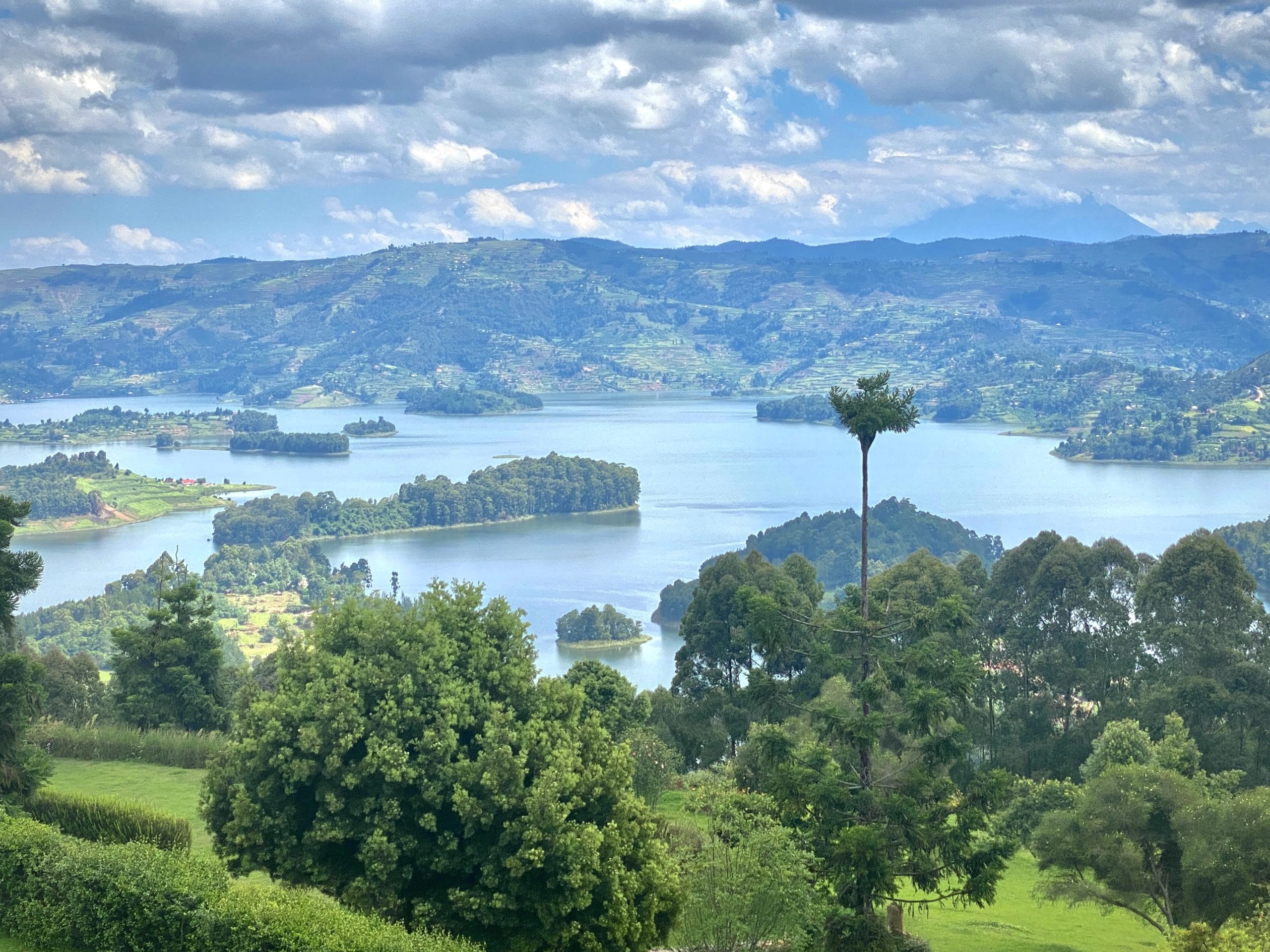
What followed was a team sport: room inspection, grimace, polite smile, collective retreat to reception. After changing rooms multiple times—with growing determination and increasingly specific requests—we eventually achieved the holy grail: partial lake views, reduced traffic noise, and an incense level no longer capable of causing hallucinations.
And that’s where Day One ended: not with lions or leopards, but with all of us finally settled into our respective rooms—slightly sun‑melted, smelling faintly of incense, and congratulating ourselves for successfully negotiating a room change. By then it was properly night, the kind that makes your eyelids feel heavy the moment your head hits the pillow. We slept early, knowing the real reason we’d come was waiting. Tomorrow, we’d meet up properly as a group, load up the vehicle, and finally begin the official safari journey.